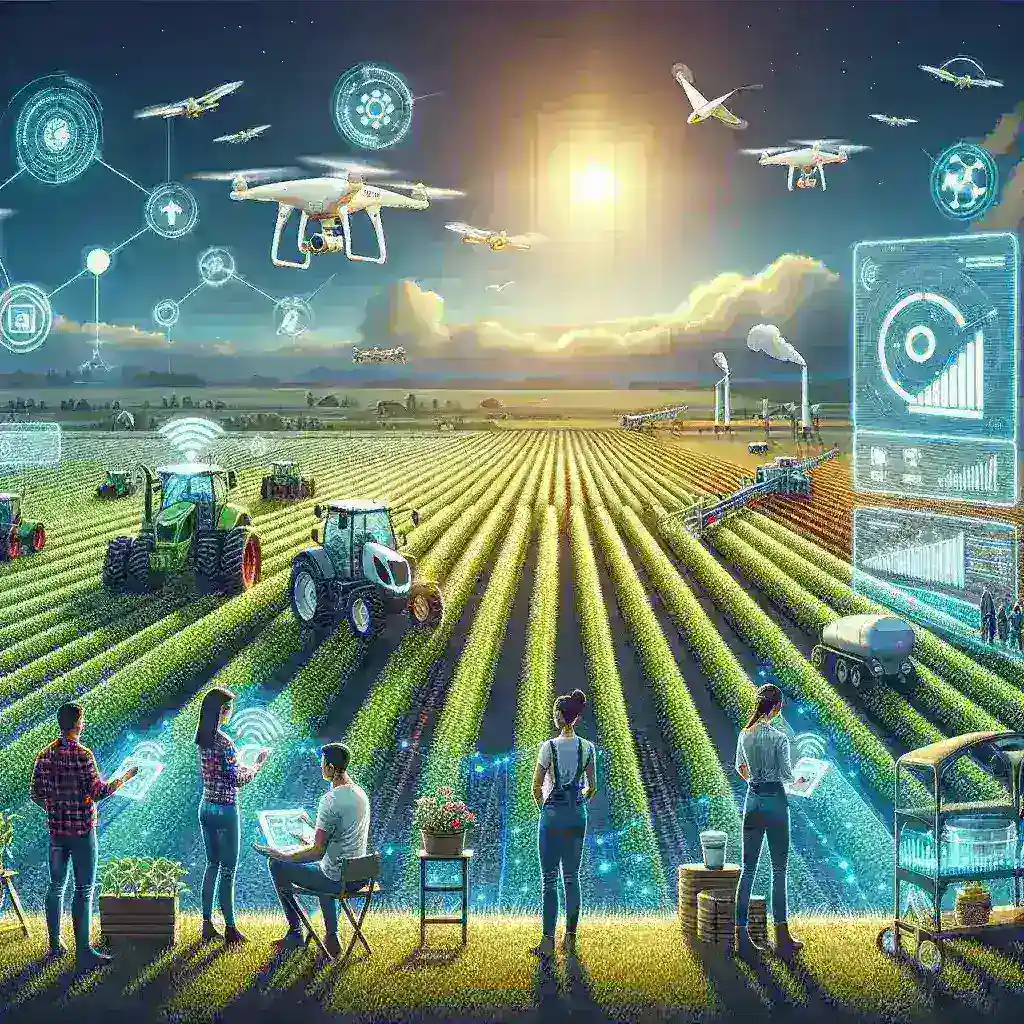
Introduction to Smart Farming and Precision Agriculture
The agricultural sector stands at the precipice of a technological revolution. As global population continues to rise and climate challenges intensify, traditional farming methods are proving insufficient to meet growing demands. Enter smart farming technologies – the integration of artificial intelligence, IoT devices, and data analytics that is transforming how we cultivate crops and raise livestock. These innovations are not merely supplementary tools but are rapidly becoming essential components of modern agricultural practices.
Precision agriculture, a farming management concept that utilizes digital techniques to monitor and optimize agricultural production processes, has evolved significantly with the integration of AI technologies. Today’s smart farming solutions enable farmers to make data-driven decisions that maximize yields while minimizing resource usage, creating more sustainable and efficient agricultural systems worldwide.
This technological revolution represents a paradigm shift in how we approach food production. By 2050, the global population is projected to reach 9.7 billion, requiring a 70% increase in food production. Smart farming technologies powered by AI offer a promising path toward meeting this challenge while addressing environmental concerns that have long plagued conventional farming methods.
The Evolution of Agricultural Technology: From Mechanization to AI
The journey of agricultural innovation spans centuries, with each technological leap fundamentally changing how humans produce food. Understanding this historical progression provides valuable context for appreciating the revolutionary nature of today’s AI-driven farming technologies.
Historical Perspective on Agricultural Innovation
Agriculture has undergone several major transformations throughout human history:
- Early Mechanization (1800s-1900s): The introduction of mechanical equipment like tractors and harvesters replaced manual labor and animal power.
- Green Revolution (1950s-1960s): Development of high-yielding crop varieties, synthetic fertilizers, and pesticides dramatically increased food production.
- Precision Agriculture 1.0 (1990s): The emergence of GPS technology enabled variable rate application of inputs based on field mapping.
- Digital Agriculture (2000s): Integration of sensors, remote sensing, and farm management software began the digitization of farming operations.
- Smart Farming (2010s-Present): The convergence of IoT, big data, cloud computing, and artificial intelligence has created unprecedented capabilities for agricultural optimization.
This evolution reflects agriculture’s continuous adaptation to new technologies. However, the current AI revolution represents a quantum leap rather than incremental progress. While previous innovations primarily enhanced physical capabilities, today’s smart farming technologies augment human decision-making and introduce autonomous systems capable of complex analytical tasks.
The Technological Foundation of Smart Farming
Modern smart farming rests on several interconnected technological pillars:
- Internet of Things (IoT): Networks of connected sensors and devices that continuously gather field and livestock data.
- Big Data Analytics: Processing of vast agricultural datasets to identify patterns and insights.
- Artificial Intelligence: Algorithms that interpret complex data and make or recommend decisions.
- Robotics: Automated machines that perform tasks with precision and consistency.
- Cloud Computing: Remote data storage and processing that enables access to powerful computing resources.
- Connectivity Solutions: Technologies that ensure reliable data transmission in rural environments.
These technologies don’t operate in isolation but function as an integrated ecosystem. Data flows from field sensors to cloud platforms, where AI algorithms process the information and generate actionable insights delivered to farmers’ smartphones or directly to automated farm equipment. This seamless integration creates a new agricultural paradigm where data-driven decision-making replaces intuition and tradition.
Core AI Technologies Transforming Precision Agriculture
Artificial intelligence in agriculture encompasses several specialized technologies, each addressing different aspects of farming operations. Understanding these core AI capabilities reveals how they collectively enable unprecedented levels of precision and efficiency.
Machine Learning and Predictive Analytics
Machine learning algorithms form the backbone of agricultural AI systems. These sophisticated programs can:
- Analyze historical yield data alongside weather patterns to predict optimal planting times
- Process soil sensor readings to determine ideal fertilizer application rates
- Examine market trends to forecast commodity prices and inform planting decisions
- Identify correlations between multiple variables that human analysis might miss
For example, a study by the University of Illinois demonstrated that machine learning-based planting date recommendations increased corn yields by an average of 5-7% compared to traditional calendar-based planting. These algorithms continuously improve as they process more data, becoming increasingly accurate over time.
Computer Vision and Image Recognition
AI-powered image analysis has revolutionized crop monitoring and livestock management through:
- Early detection of plant diseases by identifying subtle leaf discoloration or texture changes
- Weed identification for targeted herbicide application or mechanical removal
- Fruit ripeness assessment to optimize harvest timing
- Livestock health monitoring through behavioral and physical appearance analysis
Modern computer vision systems can distinguish between crop plants and dozens of weed species with over 95% accuracy, enabling precision weeding that reduces herbicide use by up to 90%. When deployed via drones, these systems can scan hundreds of acres daily, identifying issues days or weeks before they would become visible to human observers.
Natural Language Processing and Voice Recognition
While less discussed than other agricultural AI applications, language technologies are making farm management more accessible through:
- Voice-controlled farm management systems that allow hands-free operation during fieldwork
- Automated translation of agricultural research and market information
- Virtual assistants that provide real-time recommendations and answers to farming questions
- Documentation of field observations through voice notes converted to searchable text
These technologies are particularly valuable for smallholder farmers with limited technical expertise, as they provide intuitive interfaces for accessing advanced agricultural knowledge and tools.
Robotics and Autonomous Systems
AI-driven robotics represents perhaps the most visible manifestation of smart farming, with systems capable of:
- Autonomous tractors that precisely follow optimized paths through fields
- Robotic harvesters that identify and pick only ripe fruits and vegetables
- Drone swarms that monitor crop conditions and apply treatments with centimeter-level precision
- Automated irrigation systems that deliver water exactly where and when it’s needed
These systems not only reduce labor requirements but also minimize resource waste through unprecedented precision. For instance, See & Spray technology developed by John Deere can reduce herbicide usage by up to 77% by targeting individual weeds rather than broadcasting chemicals across entire fields.
Smart Farming Applications Across the Agricultural Value Chain
AI-powered smart farming extends beyond crop production to encompass the entire agricultural value chain, from pre-planting planning to post-harvest processing and distribution.
Pre-Season Planning and Decision Support
Before seeds even touch the soil, AI systems assist farmers with critical planning decisions:
- Crop Selection: AI analyzes soil conditions, climate forecasts, and market projections to recommend optimal crop varieties for specific fields.
- Resource Allocation: Predictive models help determine the most efficient distribution of water rights, equipment time, and labor across different farm operations.
- Risk Assessment: Advanced simulations evaluate potential outcomes under various weather and market scenarios, enabling proactive risk management strategies.
A farmer in Iowa might receive an AI recommendation to plant drought-resistant corn varieties in specific field sections based on soil moisture retention patterns and long-range weather forecasts, potentially saving thousands of dollars in lost yield during dry seasons.
Soil and Field Management
Precision soil management represents one of the most established applications of smart farming:
- Soil Health Monitoring: Networks of in-ground sensors track moisture, nutrient levels, pH, and microbial activity in real-time.
- Variable Rate Application: AI systems create detailed prescription maps for applying fertilizers and amendments at varying rates across fields.
- Compaction Management: Autonomous equipment follows optimized routes to minimize soil compaction based on moisture conditions and soil type.
- Carbon Sequestration: Advanced models track and optimize farming practices to maximize carbon capture in agricultural soils.
The economic and environmental benefits are substantial. Studies show that variable rate fertilizer application guided by AI can reduce nitrogen use by 15-30% while maintaining or improving yields, simultaneously cutting costs and reducing water pollution from runoff.
Crop Monitoring and Management
Once crops are growing, AI-powered monitoring systems provide unprecedented visibility into field conditions:
- Disease and Pest Detection: Drones equipped with multispectral cameras can identify pest infestations or disease outbreaks before visible symptoms appear.
- Stress Identification: AI analysis of plant appearance and physiological data detects water, nutrient, or temperature stress at early stages.
- Growth Tracking: Automated measurement of plant height, density, and development stage enables precise growth modeling.
- Yield Prediction: Combining multiple data streams allows increasingly accurate yield forecasts throughout the growing season.
The early detection capabilities of these systems can be game-changing. A potato farmer in Idaho using drone-based monitoring identified a fungal infection seven days earlier than traditional scouting methods would have, allowing targeted treatment that prevented an estimated 30% yield loss.
Water Management and Irrigation
With water scarcity becoming a critical concern globally, AI-driven irrigation represents a crucial application of smart farming:
- Precision Irrigation: Microirrigation systems deliver water directly to plant root zones based on real-time soil moisture data.
- Evapotranspiration Modeling: AI combines weather data, crop type, and growth stage to calculate exact water requirements.
- Leak Detection: Pressure sensors and flow monitors identify irrigation system failures for immediate repair.
- Water Quality Monitoring: Automated testing systems track irrigation water parameters to prevent contamination issues.
The water savings can be dramatic. California almond growers implementing AI-managed drip irrigation have reported water use reductions of 20-40% while maintaining or improving nut quality and yield.
Livestock Management and Welfare
Smart farming technologies extend beyond crop production to revolutionize animal agriculture:
- Individual Animal Monitoring: Wearable sensors track vital signs, activity levels, and feeding behavior of individual animals.
- Automated Feeding Systems: AI-controlled equipment adjusts feed composition and quantity based on individual animal needs.
- Disease Detection: Early warning systems identify potential health issues through behavioral changes or biometric abnormalities.
- Reproductive Management: Automated detection of estrus and optimal breeding times improves reproductive efficiency.
These systems not only improve productivity but enhance animal welfare by enabling rapid response to health issues. Dairy operations using AI monitoring systems have documented reductions in antibiotic use of up to 50% through earlier intervention and more targeted treatment.
Harvest Optimization and Post-Harvest Processing
The final stages of production benefit from AI-driven precision as well:
- Harvest Timing: Ripeness sensors and predictive models determine optimal harvest windows for maximum quality and yield.
- Selective Harvesting: Robotic systems harvest only produce meeting specific ripeness or quality criteria.
- Quality Grading: AI-powered optical sorting systems classify harvested products with greater accuracy than traditional methods.
- Storage Optimization: Predictive models determine ideal storage conditions based on crop characteristics and market timing.
For specialty crop producers, these technologies can dramatically increase the percentage of premium-grade product. A Washington apple orchard implementing AI-guided selective harvesting reported a 23% increase in premium fruit recovery and a 15% reduction in storage losses.
Economic and Environmental Impact of AI in Agriculture
The adoption of smart farming technologies extends beyond operational improvements to create substantial economic and environmental benefits that address agriculture’s most pressing challenges.
Productivity and Yield Improvements
AI-driven precision agriculture consistently demonstrates yield improvements across various production systems:
- Precision planting and fertilization typically increase crop yields by 10-15%
- Early pest and disease detection can prevent yield losses of 20-40% during outbreak years
- Optimized irrigation management improves yields by 8-20% while reducing water usage
- In livestock operations, AI-enhanced feeding and health management can increase production efficiency by 15-25%
These yield improvements are particularly significant given the diminishing returns of conventional intensification methods like increased fertilizer application or breeding alone. Smart farming technologies offer a path to continued productivity growth without proportional resource input increases.
Resource Efficiency and Input Reduction
Perhaps the most compelling aspect of AI-powered agriculture is its ability to reduce resource consumption while maintaining or improving yields:
- Precision fertilizer application reduces nitrogen use by 15-30% and phosphorus by 10-20%
- Smart irrigation systems cut water consumption by 20-50% compared to conventional methods
- Targeted pest management can reduce pesticide use by 30-90% depending on the system
- Energy consumption in greenhouse operations can decrease by 25-40% through AI-optimized climate control
These efficiency gains translate directly to cost savings for producers while reducing agriculture’s environmental footprint. A 1,000-acre corn operation implementing comprehensive precision agriculture can save $40,000-$80,000, annually on input costs while reducing its environmental impact.
Environmental Sustainability Benefits
The environmental advantages of AI-enabled smart farming address several critical ecological challenges:
- Reduced Greenhouse Gas Emissions: Precision fertilizer application significantly decreases nitrous oxide emissions, a potent greenhouse gas.
- Decreased Water Pollution: Targeted input application reduces agricultural runoff containing phosphorus and nitrogen that causes algal blooms and water quality issues.
- Soil Health Improvement: Data-driven soil management practices enhance carbon sequestration and reduce erosion.
- Biodiversity Protection: Reduced pesticide use and more precise application methods minimize impacts on beneficial insects and wildlife.
These environmental benefits position smart farming as a key component of climate-smart agriculture. Studies suggest widespread adoption of precision agriculture techniques could reduce agricultural greenhouse gas emissions by 10-15% while improving resilience to climate change impacts.
Labor Optimization and Workforce Transformation
AI and automation in agriculture are reshaping farm labor dynamics in complex ways:
- Automation of repetitive tasks reduces labor requirements for certain operations by 30-80%
- Skilled labor demands increase for technology maintenance, data analysis, and system management
- Worker safety improves as dangerous or physically demanding tasks are automated
- New career paths emerge in agricultural technology development and support
While total agricultural employment may decrease in some sectors, the transformation creates opportunities for higher-skilled, better-compensated positions. The agricultural workforce is evolving from one dominated by manual labor to a more technically skilled profession requiring digital literacy and analytical capabilities.
Challenges and Barriers to Adoption
Despite the compelling benefits, several significant challenges limit the widespread adoption of AI-powered smart farming technologies.
Technical Challenges and Infrastructure Limitations
The technical requirements for implementing smart farming systems present substantial hurdles:
- Connectivity Issues: Many rural agricultural areas lack reliable broadband internet access necessary for real-time data transmission.
- Data Standardization: Incompatible data formats and systems create integration challenges across different platforms and equipment.
- Technical Complexity: Many systems require specialized knowledge for proper implementation and maintenance.
- Sensor Reliability: Environmental conditions in agricultural settings can compromise sensor performance and durability.
These infrastructure limitations are particularly pronounced in developing regions, creating a risk of widening the technological divide between large commercial operations and smallholder farmers who could benefit greatly from precision agriculture techniques.
Economic Barriers and Investment Requirements
The financial aspects of smart farming adoption represent significant challenges:
- High Initial Costs: Comprehensive smart farming systems require substantial upfront investment in sensors, equipment, and software.
- Uncertain ROI Timelines: Farmers may struggle to predict when investments will generate positive returns, especially with rapidly evolving technology.
- Limited Financing Options: Traditional agricultural lending may not adequately support technology investments with different risk profiles than conventional equipment.
- Scale Advantages: Larger operations can distribute technology costs across more acres, creating adoption disparities based on farm size.
The economic equation is particularly challenging for smaller operations and those with thin profit margins. A comprehensive precision agriculture system can cost $50-$200 per acre to implement, representing a significant investment that may take 3-5 years to recoup through input savings and yield improvements.
Data Ownership, Privacy, and Security Concerns
The data-intensive nature of smart farming raises important questions about control and security:
- Data Ownership: Uncertainty about who owns farm data collected by equipment manufacturers or service providers creates hesitation among farmers.
- Privacy Concerns: Detailed farm data could reveal sensitive business information about operations and practices.
- Cybersecurity Risks: Connected agricultural systems create potential vulnerabilities to hacking or ransomware attacks.
- Market Power Concentration: Large agricultural technology companies accumulating vast data resources may gain disproportionate market influence.
These concerns extend beyond individual farm operations to questions about food security and agricultural sovereignty. As agriculture becomes more digitized, the security and control of agricultural data systems become matters of national interest.
Knowledge Gaps and Training Requirements
The human element presents perhaps the most persistent barrier to smart farming adoption:
- Digital Literacy: Many farmers, particularly in older generations, may lack the technical background to confidently adopt complex digital systems.
- Training Needs: Effective use of smart farming technologies requires significant education and skills development.
- Support Infrastructure: Limited availability of technical support services in rural areas complicates implementation and troubleshooting.
- Cultural Resistance: Farming traditions and practices developed over generations may create resistance to technology-driven approaches.
Addressing these knowledge gaps requires comprehensive education and extension efforts. Agricultural programs are increasingly incorporating digital agriculture components, but reaching existing farmers through effective training programs remains challenging.
Future Directions and Emerging Technologies
The evolution of smart farming continues at a rapid pace, with several emerging technologies poised to further transform agricultural practices.
Edge Computing and 5G Connectivity
Next-generation connectivity solutions promise to address critical infrastructure limitations:
- Edge Computing: Processing data directly on farm devices reduces bandwidth requirements and enables real-time decision-making even with intermittent connectivity.
- 5G Networks: The rollout of high-speed, low-latency 5G connectivity to rural areas will enable more sophisticated real-time applications and remote operation capabilities.
- Low-Power Wide-Area Networks: Technologies like LoRaWAN provide cost-effective connectivity solutions for distributed agricultural sensors across large areas.
- Satellite Internet: New satellite constellations are bringing broadband connectivity to previously unreachable agricultural regions.
These connectivity advances will dramatically expand the potential applications of smart farming technologies, enabling more sophisticated automation and real-time monitoring across even the most remote agricultural operations.
Advanced Robotics and Autonomous Systems
The next generation of agricultural robotics will feature unprecedented capabilities:
- Swarm Robotics: Coordinated teams of smaller robots working collaboratively to accomplish tasks more efficiently than large machines.
- Soft Robotics: Flexible gripping mechanisms capable of handling delicate crops without damage for automated harvesting of fragile produce.
- Fully Autonomous Operation: Systems capable of completing entire growing cycles with minimal human intervention, from planting to harvest.
- Multi-Function Platforms: Versatile robotic systems that can perform diverse tasks throughout the season rather than specialized single-purpose machines.
These advancements will reduce the capital investment required for automation by creating more versatile systems while further reducing labor requirements and improving precision.
Blockchain and Traceability Solutions
Distributed ledger technologies are addressing transparency and trust challenges in the food system:
- Supply Chain Transparency: Blockchain systems create immutable records of food production practices and movement through the supply chain.
- Smart Contracts: Automated agreements that execute when predefined conditions are met, streamlining agricultural transactions and ensuring fair compensation.
- Consumer Connectivity: Direct links between production data and consumer-facing information enable informed purchasing decisions.
- Certification Verification: Tamper-proof documentation of organic, regenerative, or other certification requirements.
These technologies create new value opportunities by authenticating production practices and enabling premium pricing for verified sustainable or ethical production methods.
Gene Editing and AI-Driven Crop Development
The convergence of biotechnology and artificial intelligence is accelerating crop improvement:
- CRISPR Applications: Precise genetic editing techniques are creating crops with enhanced resilience, nutrition, and productivity.
- AI-Accelerated Breeding: Machine learning algorithms predict crop performance from genetic markers, dramatically speeding traditional breeding programs.
- Digital Twinning: Computer models simulate crop development under various conditions to predict performance before field testing.
- Microbiome Engineering: Artificial intelligence identifies beneficial soil microorganisms that can be cultured to enhance crop performance naturally.
These integrated approaches combine the precision of modern biotechnology with the predictive power of artificial intelligence to develop crop varieties specifically optimized for smart farming systems and changing climate conditions.
Integrated Food Systems and Circular Economy Models
The future of smart farming extends beyond individual operations to encompass entire food systems:
- Urban-Rural Integration: AI-optimized logistics systems connecting urban consumers directly with rural producers, reducing food miles and distribution inefficiencies.
- Circular Resource Flows: Smart systems tracking agricultural byproducts and waste streams to identify valorization opportunities and close nutrient cycles.
- Vertical Integration: Connected systems linking production decisions directly to processing requirements and consumer demand signals.
- Climate-Smart Agriculture: Integrated approaches that optimize for both productivity and environmental services like carbon sequestration and biodiversity support.
These holistic approaches recognize that maximizing the benefits of smart farming requires thinking beyond individual fields or farms to optimize entire agricultural ecosystems and food value chains.
Conclusion: The Path Forward for AI-Powered Agriculture
Smart farming technologies powered by artificial intelligence represent not merely an incremental improvement to agricultural practices but a fundamental reimagining of how we produce food. The integration of sensors, data analytics, machine learning, and automation creates unprecedented capabilities for precision, efficiency, and sustainability in agricultural systems.
The potential benefits are substantial: increased yields with reduced input requirements, minimized environmental impacts, enhanced resilience to climate variability, and improved economic outcomes for producers. These technologies offer promising solutions to agriculture’s most pressing challenges—feeding a growing global population while reducing environmental impacts and adapting to climate change.
However, realizing this potential requires addressing significant challenges. Technical limitations, economic barriers, data governance concerns, and knowledge gaps all currently restrict the adoption of smart farming technologies, particularly among smaller producers and in developing regions. Without thoughtful approaches to these challenges, there is a risk that the benefits of agricultural AI will accrue primarily to large, well-capitalized operations, potentially exacerbating existing inequalities in food systems.
The path forward requires coordinated efforts across multiple domains:
- Policy Development: Creating regulatory frameworks that encourage innovation while protecting farmer interests and addressing data rights.
- Infrastructure Investment: Expanding rural broadband access and other critical technical infrastructure to support digital agriculture.
- Education and Extension: Developing comprehensive training programs to build necessary technical skills among current and future farmers.
- Collaborative Research: Fostering partnerships between technology developers, agricultural scientists, and farmers to ensure solutions address real-world needs.
- Inclusive Design: Creating smart farming technologies accessible to diverse operations, including solutions appropriate for smallholder farmers globally.
With thoughtful development and implementation, AI-powered smart farming technologies can help create agricultural systems that are not only more productive but also more sustainable, resilient, and equitable. The future of agriculture will be built on the integration of traditional farming knowledge with cutting-edge digital technologies, creating food production systems that are both high-tech and deeply connected to sustainable ecological principles.
As we navigate this technological transition, the measure of success will not be merely the sophistication of the technologies deployed but how effectively they serve the fundamental purpose of agriculture: providing nutritious food for all while preserving the natural systems upon which all food production ultimately depends. Smart farming technologies represent powerful tools toward this goal—tools that, properly applied, can help create a more sustainable and food-secure future.
Leave a Reply